
WELCOME BONUS 300%
UP TO €2000 + 100
FREE SPINS
UP TO €2000 + 100
FREE SPINS
Home → Blackjack
Blackjack at Big Lucky Casino: Variants, Rules and Payouts
No Double Down on three cards
The rule prohibiting Double Down on three cards directly impacts the strategic flexibility available to players during standard Blackjack hands. This restriction applies to the majority of table games offered by Big Lucky Casino, effectively limiting the player's ability to maximize potential returns on strong starting positions like a total of eleven or twelve against a dealer weak card. Consequently, the expected value decreases slightly compared to tables allowing this maneuver, requiring strict adherence to basic strategy charts that account for this specific limitation to minimize long-term losses.
This exclusion from doubling rules contrasts sharply with more liberal variants where players can double on any number of cards, including three or four. In standard six-deck games found at the casino, the inability to double on three-card totals removes a key optimization tool used by experienced gamblers to capitalize on favorable dealer up-cards. The mathematical consequence is a marginal increase in the house edge, as players must stand on suboptimal totals rather than taking the calculated risk of doubling their wager for a single additional card draw.
The practical implication for regular players is a need for greater discipline when holding multi-card hands that would traditionally warrant an aggressive doubling strategy. Instead of increasing the bet size on a three-card eighteen against a dealer nine, the player must simply call for a hit or stand based on the base probability. This conservative approach ensures compliance with the game rules while accepting that the potential upside for any single hand is capped at the original wager amount plus the standard one-to-one payout.
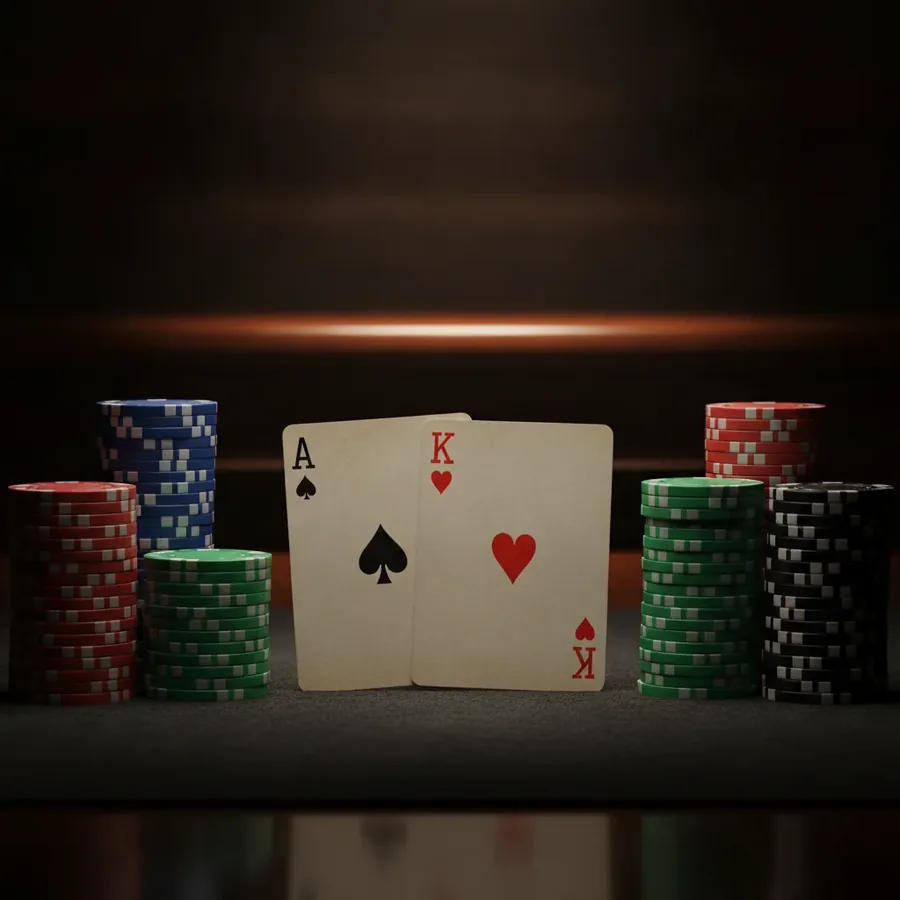
Register Late Surrender correctly in three steps
Late Surrender is a rare rule feature that allows players to forfeit half their bet after the dealer checks for Blackjack, significantly reducing potential losses on weak hands. To utilize this option correctly, players must first identify eligible hands, typically those totaling ten or eleven against a dealer showing a ten or ace, before formally requesting the surrender action through the game interface. This specific mechanic improves the overall Return to Player percentage by approximately 0.08 percent, providing a crucial safety net during unfavorable streaks.
The second step involves verifying that the specific Blackjack variant supports this rule, as Early Surrender is much rarer and offers greater value by allowing forfeiture before the dealer checks for Blackjack. At Big Lucky Casino, most standard tables do not offer Early Surrender, making the late version the only viable exit strategy for marginal hands. Players should note that this rule does not apply if the dealer has already revealed a natural Blackjack, ensuring the house retains its advantage in those specific scenarios.
Completing the registration process requires understanding that surrendering returns exactly fifty percent of the original stake, leaving the remaining half lost to the casino immediately. This outcome is mathematically superior to hitting or standing on a hard sixteen against a dealer nine, where the probability of busting or losing is substantially higher. By consistently applying this rule in appropriate situations, players can systematically reduce the effective house edge and preserve their bankroll over extended playing sessions.
Finally, it is important to remember that Side Bets such as Any Pair or 21+3 are never eligible for surrender, regardless of the main hand outcome. These auxiliary wagers settle independently based on their own specific paytables and cannot be partially refunded through the surrender mechanism. Players must keep these bets separate in their mental accounting to accurately track their true win rate and avoid confusing side bet losses with main game surrenders.
Error insurance: 7 percent additional house edge
Insurance is a side bet offered when the dealer shows an Ace, paying 2:1 if the dealer has a ten-value hole card, but carrying a massive 7.47 percent house edge. This statistic indicates that the casino retains nearly eight percent of all money wagered on insurance over the long term, making it one of the most expensive bets in the entire game. Mathematical analysis consistently advises against taking insurance unless the player is actively counting cards and holds a true count of positive three or higher.
The cost of this erroneous bet becomes apparent when comparing it to the standard 3:2 Blackjack payout, which carries a house edge of just 0.46 percent under optimal conditions. While insurance might seem like a safe hedge against losing the main bet, the negative expected value ensures that frequent takers will lose money steadily regardless of short-term luck. For every hundred euros wagered on insurance, the player can expect to lose approximately seven euros and forty-seven cents, eroding the bankroll far faster than the main game itself.
Accepting insurance without a positive card count is statistically equivalent to throwing away funds, as the probability of the dealer having a ten-value card is roughly thirty percent, insufficient to justify the 2:1 odds. The correct strategy dictates always declining this bet, thereby preserving the lower house edge associated with the primary Blackjack hand. Deviating from this advice introduces unnecessary variance and accelerates the depletion of gaming funds without any corresponding increase in winning probability.
The impact on overall profitability is severe, as even occasional insurance bets can drastically inflate the effective house edge for a session if the dealer frequently reveals an Ace. Players who ignore the basic strategy recommendation to decline insurance will find their long-term retention rate plummeting due to the compounding effect of this high-cost side bet. Maintaining strict discipline on this point is essential for anyone aiming to extend playtime and minimize financial loss at the virtual tables.
Double Down after Split: which tables allow it
Double Down after Split (DAS) is a favorable rule that permits players to double their wager on each split hand, provided they receive only one additional card per new hand. This rule reduces the house edge by approximately 0.14 percent, offering a measurable advantage to skilled players who frequently split pairs like fours or fives against dealer up-cards. Tables featuring DAS allow for more aggressive betting strategies during split sequences, maximizing potential returns on hands that have been divided into multiple independent plays.
At Big Lucky Casino, the availability of DAS varies by game provider and specific table configuration, with some Evolution Gaming tables explicitly supporting this feature while others restrict doubling to the initial two cards only. Players must check the game rules screen before seating to confirm whether DAS is enabled, as assuming its presence on all tables can lead to incorrect strategic decisions. The distinction between tables with and without DAS is critical for calculating the true expected value of splitting pairs in various scenarios.
The financial benefit of DAS becomes significant over hundreds of hands, as it allows players to capitalize on favorable splits by increasing their exposure when the deck composition is advantageous. Without this rule, players are forced to stand on potentially strong split hands, missing out on opportunities to double their profit on hands like a pair of eights split against a dealer six. Confirming the presence of DAS helps players adjust their basic strategy charts accordingly to ensure they are extracting maximum value from each split decision.
Additionally, players should note that resplitting Aces is often restricted to receiving only one card per Ace, which limits the effectiveness of DAS on those specific hands. While DAS applies to other split pairs like nines or tens, the one-card restriction on Aces means doubling is rarely applicable there anyway. Understanding these nuances ensures that players do not mistakenly expect to double down on split Aces, maintaining accurate expectations about the rules governing each specific hand type.
Which hands are excluded from Surrender?
Surrender options are strictly limited to the main Blackjack hand and explicitly exclude all Side Bets such as Any Pair, 21+3, Hot 3, and Bust It from being partially refunded. These auxiliary wagers settle immediately based on their own independent outcomes and cannot be forfeited for a partial return, meaning players lose the entire side bet amount if it loses. This exclusion is standard across most online platforms, including Big Lucky Casino, ensuring that side bet profits and losses remain isolated from the main game's surrender mechanics.
Hands totaling twenty or twenty-one are also ineligible for surrender, as these are considered winning or pushing hands that require no further action or risk mitigation. Attempting to surrender a natural Blackjack or a pat hand would contradict the fundamental purpose of the rule, which is to cut losses on weak totals like sixteen or seventeen. The game software automatically disables the surrender button for these strong hands, preventing players from voluntarily giving up guaranteed wins or pushes.
Furthermore, hands resulting from a split where the dealer has already checked for Blackjack may have different surrender eligibility depending on the specific table rules, though late surrender generally remains available for the main hand only. Players must ensure they understand whether the surrender applies to the original hand or the split components, as confusion here can lead to missed opportunities or erroneous actions. Clarifying these distinctions helps maintain clarity regarding which portions of the wager are protected by the surrender option.
Finally, any hand played with a bonus credit or free spin winnings may have unique restrictions regarding surrender, as promotional funds often come with specific terms that override standard game rules. Players should verify the current bonus terms to determine if surrendered hands affect the wagering requirements or if the returned portion counts toward meeting the playthrough conditions. Understanding these interactions ensures that players do not inadvertently violate bonus agreements by using surrender on promotional balances.
Blackjack variants at a glance
| Variant | Payout | House edge | Rule | Bet range |
|---|---|---|---|---|
| Blackjack 6 Decks, S17, DAS, DOA, Auszahlung 3:2, Basisstrategie | 99.54% | 0.46% | Dealer steht auf Soft 17; Verdopplung auf jeder Zweierkarte; Verdopplung nach Split erlaubt; keine Aufgabe. Basisstrategie ist für diesen Wert zwingend | Blackjack 3:2, normaler Gewinn 1:1, Insurance 2:1 |
| Blackjack Ein Deck, klassische Regeln, 3:2 | 99.85% | 0.15% | Weniger Decks = niedrigerer Vorteil; ein Deck gibt ca. −0.48 Prozentpunkte gegenüber 8 Decks. Oft durch 6:5 Auszahlung kompensiert. | Blackjack 3:2, Gewinn 1:1 |
| Blackjack Insurance / Versicherung (6–8 Decks) | 92.53% | 7.47% | Separate Nebenwette bis 50% der Hauptwette, wenn der Dealer ein Ass hat. Basisstrategie schreibt IMMER Ablehnung vor (außer Karten zählen bei True Count ≥ +3). Bei einem Deck Vorteil ≈ 5.88% | Insurance 2:1 |
| Blackjack Liberal Vegas Strip (liberale Regeln, 3:2) | 99.72% | 0.28% | Günstigste Regelkombination: S17 + DAS + Resplit + Late Surrender. Standardabweichung 1,15 | Blackjack 3:2, Gewinn 1:1 |
| Blackjack Split / Double / H17 – Regel-Effekte | n.a. (Regel-Modifikatoren) | H17 +0.22 Prozentpunkte; RSA −0.08 Prozentpunkte; DAS −0.14 Prozentpunkte | Dealer Hits Soft 17 verschlechtert RTP um 0.22 Prozentpunkte; Resplit Aces verbessert um 0.08 Prozentpunkte; Double After Split verbessert um ca. 0.14 Prozentpunkte; 6 Decks statt 8 – ca. 0.02 Prozentpunkte. | Double – Einsatz ×2 mit einer Karte; Split – bis 4 Hände; Ass-Split meist mit einer Karte. |
| Blackjack Surrender (Late Surrender) – Regel-Effekt | n.a. (Regel-Modifikator) | −0.08 Prozentpunkte | Spieler gibt Hand nach Dealer-Blackjack-Prüfung auf, verliert die Hälfte des Einsatzes. Verbessert RTP um ca. 0.08 Prozentpunkte. Early Surrender ist wesentlich wertvoller (bis −0.6 Prozentpunkte), aber extrem selten. | Rückzahlung 50% des Einsatzes |
What Push Means: Stake Returns to You
A push occurs when the player and dealer share an identical final hand total, resulting in the immediate return of the original wager without any win or loss. This mechanism is fundamental to games like Blackjack Liberal Vegas Strip where the standard payout for a winning hand is 1:1. Consequently, the bankroll remains unchanged during these specific tie scenarios, preserving the exact stake amount for future betting rounds.
The statistical impact of pushes varies significantly across different rule sets, influencing the overall house edge calculations for each variant. For instance, the Surrender option reduces the house advantage by approximately 0.08 percentage points, while hitting on soft 17 increases it by 0.22 percentage points. These marginal adjustments alter the frequency of ties and thus the long-term expected value for the participant over hundreds of thousands of hands.
Understanding these dynamics helps players manage expectations regarding variance and potential draw frequencies during extended playing sessions. The absence of a monetary exchange during a push means that the theoretical return to player percentage does not immediately reflect a profit or deficit. Therefore, participants should view pushes as neutral events that maintain capital rather than opportunities for gain or losses.
Which rule variants does the software show?
Blackjack Liberal Vegas Strip offers liberal rules with a favorable 3:2 payout structure and a low house edge of 0.28 percent. This variant allows splitting up to four hands and doubling after split, which significantly improves the player's mathematical advantage compared to restrictive versions. The game utilizes six decks instead of eight, contributing an additional 0.02 percentage point reduction in the house edge.
Standard configurations often feature H17 rules where the dealer hits on soft seventeen, adding 0.22 percentage points to the house advantage. In contrast, S17 rules see the dealer stand, providing a more favorable environment for strategic play. Resplitting Aces further enhances the RTP by 0.08 percentage points, while allowing double after split improves it by roughly 0.14 percentage points.
Early surrender is notably absent from most modern implementations, despite offering a substantial benefit of up to 0.6 percentage points. Late surrender, available in specific variants, only returns 50 percent of the bet after the dealer checks for blackjack. This limitation makes it less valuable than early surrender options found in rare legacy games, affecting optimal strategy decisions.
Why Loss Progression Quickly Reaches Table Limit
Progressive betting systems rely on increasing stakes after losses to recoup previous deficits, but table limits cap the maximum allowable wager. For example, Lightning Blackjack restricts bets to a maximum of 2,500 EUR, preventing infinite scaling of the martingale strategy. Once the required stake exceeds this ceiling, the system fails to recover accumulated losses regardless of subsequent wins.
Infinite Blackjack allows higher limits up to 5,000 EUR, yet exponential growth still outpaces typical bankroll capacities rapidly. A sequence of ten consecutive losses starting at 1 EUR requires a bet of 1,024 EUR on the eleventh attempt. Such rapid escalation demonstrates why fixed progression models are mathematically unsustainable against rigid boundary constraints imposed by the operator.
Lightning Blackjack introduces multipliers up to 25x, but these apply only to specific winning hands and do not alter the underlying limit structure. Players attempting to chase losses through side bets like Any Pair face separate RTP calculations distinct from the main game. The combination of high volatility and strict caps ensures that aggressive progression strategies inevitably hit insurmountable barriers.
Insurance Pays 2:1 Yet Still Costs Money
Insurance is a side bet offered when the dealer shows an ace, paying 2:1 if the dealer has a natural blackjack. However, this wager carries a significant house edge of 7.47 percent in games using six to eight decks. Basic strategy universally recommends rejecting this bet because the probability of the dealer having blackjack is lower than the implied odds.
The true count must reach plus three or higher for card counters to find insurance profitable, a condition rarely met in random shuffling. Without this specific advantage, the negative expectation remains constant, eroding the bankroll over time. The base strategy dictates always declining insurance unless precise card counting indicates a favorable deck composition.
Comparing the 92.53 percent RTP of insurance to the 99.54 percent RTP of the main game highlights its inefficiency. Paying 2:1 sounds attractive, but the frequency of dealer blackjacks is insufficient to justify the risk. Consequently, consistent participation in this side bet results in a substantial long-term financial disadvantage for the average player.
Which table limits suit 20 EUR balance?
Lightning Blackjack accepts minimum bets of 1 EUR, making it accessible for players with a modest 20 EUR bankroll. With a maximum limit of 2,500 EUR, the range accommodates both conservative and aggressive staking strategies within a single session. This flexibility allows users to adjust their exposure based on real-time performance without violating platform constraints.
Blackjack Party starts at 1.00 EUR and goes up to 1,000 EUR, offering a similar entry point for smaller balances. The party atmosphere with two moderators adds entertainment value but does not alter the mathematical expectations of the game. Players can sustain longer play sessions by keeping wagers low relative to their initial deposit.
Infinite Blackjack permits entries from 1 EUR up to 5,000 EUR, providing ample room for bankroll management. The unlimited seating capacity ensures availability, though side bets like Hot 3 carry different risks unrelated to the main game. Maintaining a 20 EUR balance requires disciplined betting to avoid rapid depletion given the inherent house edges present in all variants.
Splitting costs double bet: plan budget
Splitting a hand in Blackjack requires placing a second wager equal to the original stake, which doubles the immediate financial exposure for the player. This rule applies across all variants, including the Liberal Vegas Strip where Resplit Aces is permitted, effectively doubling the risk on each new hand created during the round. Players must account for this doubled commitment when calculating their total session bankroll requirements before initiating any split action at the table.
The cost of splitting becomes critical when analyzing the House Edge modifiers, as Double After Split (DAS) reduces the advantage by 0.14 percentage points but increases the number of active bets. In Infinite Blackjack, players can utilize unlimited seats and split hands across multiple positions, yet each split still demands an additional chip stack equal to the base bet. This structural requirement means that a single multi-split sequence can rapidly consume a significant portion of the allocated gaming funds within minutes.
Budget planning must also consider the payout structure, where a standard Blackjack pays 3:2 while a split hand typically returns 1:1 unless it forms a natural twenty-one. For instance, a 10 EUR split bet yields only 10 EUR profit on a win, compared to 15 EUR for a non-split Blackjack under identical conditions. Consequently, frequent splitters should adjust their expected return calculations downward to reflect the lower variance and reduced profitability of these specific game outcomes.
Mobile version needs 1 Mbit bandwidth
Accessing the mobile interface of Big Lucky Casino requires a minimum internet connection speed of 1 Mbit per second to ensure stable gameplay without interruptions or loading delays. This bandwidth threshold is essential for streaming live dealer tables like Lightning Blackjack, which features dynamic visual effects and real-time video feeds from Evolution Studios. Insufficient connectivity may result in dropped connections during critical moments, potentially causing missed betting windows or failed transactions on high-stakes rounds.
The data transmission rate directly impacts the performance of side bets such as Any Pair or 21+3 in Infinite Blackjack, where rapid decision-making relies on instant server responses. A stable 1 Mbit connection allows players to place bets up to 5,000 EUR seamlessly, ensuring that the user interface remains responsive during peak usage hours. Lower speeds might cause lag, forcing players to wait longer for card reveals and reducing the overall efficiency of their gaming sessions over time.
Bandwidth limitations also affect the clarity of visual elements, particularly when viewing detailed statistics like RTP percentages or house edge calculations on smaller mobile screens. Players engaging with slots, which contribute 100% to bonus wagering, require consistent data flow to track spin results accurately without buffering interruptions. Maintaining optimal network conditions ensures that all game mechanics function as intended, providing a reliable experience regardless of the device or location used for access.
Bust at 22: Stake Lost Immediately
In standard Blackjack variants offered by Big Lucky Casino, exceeding a hand value of 21 results in an immediate loss of the entire wagered amount, known as busting. This rule applies universally across all deck configurations, from single-deck games with a 99.85% RTP to eight-deck versions featuring a 0.15% house edge. Players must carefully manage their hit decisions to avoid pushing their totals beyond this critical threshold, which triggers an automatic forfeiture of funds without further negotiation.
The consequence of busting is particularly severe in games with favorable rules like Liberal Vegas Strip, where the low 0.28% house edge encourages aggressive play strategies. However, even with optimal basic strategy adherence, the mathematical probability of busting remains a significant risk factor that erodes potential profits over extended playing sessions. Understanding this binary outcome helps players balance their approach between seeking higher payouts and preserving their bankroll against inevitable losing streaks.
Side bets such as Bust It in Infinite Blackjack offer alternative opportunities but do not mitigate the primary loss incurred when the main hand exceeds 21. While these secondary wagers might pay out based on specific bust conditions, the original stake is still lost if the player's hand goes over the limit. This separation of outcomes ensures that players cannot rely on side bet wins to recover losses from busted main hands, maintaining the integrity of the core game mechanics.
Split, Double Down, and Surrender in Numbers
Splitting hands in Blackjack allows players to divide a pair into two separate wagers, with rules permitting up to four hands including Resplit Aces in liberal variants. The Double After Split (DAS) option improves the Return to Player rate by 0.14 percentage points, making it a valuable feature for strategic players seeking better odds. This mechanic significantly influences the overall house edge, reducing it from 0.46% to lower levels when combined with other favorable conditions like Soft 17 standing.
Double Down capabilities enable players to double their initial wager after receiving the first two cards, maximizing profits on strong starting hands like a total of eleven. In Infinite Blackjack, this action can be performed on any two-card combination, offering flexibility that enhances the theoretical RTP of 99.47% for the game. Utilizing this option correctly requires knowledge of basic strategy charts, which dictate when doubling yields positive expected value versus simply hitting or standing.
Surrender options, specifically Late Surrender, allow players to forfeit half their bet after the dealer checks for blackjack, reducing the house edge by 0.08 percentage points. This feature provides a safety net for weak hands against strong dealer up-cards, though it is less common than early surrender variants found elsewhere. Combining surrender with split and double down actions creates a comprehensive toolkit for minimizing losses, provided players adhere strictly to mathematically optimal decision pathways.
Even Money only possible with Dealer Ace
Even Money is an optional side bet available exclusively when the dealer shows an Ace and the player holds a natural Blackjack, guaranteeing a 1:1 payout regardless of the dealer's hole card. This mechanism eliminates the risk of pushing if the dealer also has blackjack, but it sacrifices the potential 3:2 profit that would occur if the dealer does not have a natural hand. Accepting Even Money effectively converts a winning hand into a break-even scenario relative to the insurance payout structure, altering the expected value calculation significantly.
The mathematical justification for taking Even Money depends on the remaining deck composition, as card counting can reveal when the probability of a dealer Ace being present exceeds certain thresholds. In single-deck games with a 0.15% house edge, the decision becomes more nuanced due to the higher impact of each card removal on future probabilities. Players relying on basic strategy typically decline this option, as the long-term expectation favors waiting for the full 3:2 payout rather than accepting the guaranteed smaller gain.
Insurance bets, which pay 2:1 if the dealer has blackjack, are often confused with Even Money but serve different purposes in managing risk during gameplay. While insurance protects the main bet when the dealer shows an Ace, it carries a substantial house edge of 7.47% in six-to-eight deck games, making it generally unfavorable. Distinguishing between these two concepts is crucial for players aiming to optimize their bankroll management and avoid unnecessary losses associated with poor betting decisions.
Contact
Live - online chat
Banking









Providers












Big Lucky Casino 2026